Sunday - March 13, 2005
 Hong Kong: Lantau Island
We had visited the tiny island of Cheng Chau on a previous trip, so thought we would spend a day on Lantau Island this time. The main attraction here, beside the new airport for Hong Kong, is the Po Lin Monastery and the Big Buddha. But we also wanted to see Tai O, the fishing village on stilts, and just observe a bit of everyday life in a less commercialized part of Hong Kong. It was a busy day, but we managed to do it all.
After a 20 minute ferry ride, we boarded a bus that would take us to Po Lin Monastery. This bus ride turned into a 45-minute ride along the coast of the island, through bamboo forests, over a mountain, around a reservoir, and half way up the side of another mountain. It was quite a ride. Sometimes, the driver drove so fast I thought he might have a death wish and some of the roads were were incredibly bumpy. The bus had air conditioning but I would have gladly traded it for springs! It was enough to bounce anyone's melons about.
The monastery proved to be well worth the ride. The bronze statue of Buddha is 72 ft. in height and sits atop a throne of lotus that is reached by climbing 260 steps. We dutifully climbed to the top and I was glad we made the effort, although my knees weren't so happy about it. The Big Buddha is quite awe inspiring. It was made in 122 pieces which were then welded together. On each side of the Buddha are three buddhist saints or Bodhisattavas, which were quite beautiful. And we had the most wonderful views over the countryside.
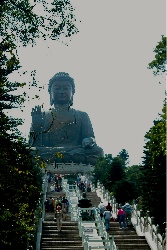
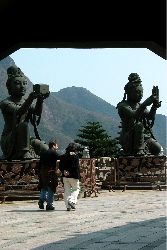
Then it was time to board another bus to take us over to the town of Tai O. Another hair (and bum) raising ride later, we arrived at the village. At first glance, I thought what the heck is all the fuss about with this place. It looked like a dump and I couldn't see why we shouldn't just get back on the bus. But we thought we would poke around a bit first after having come all that way. We just needed to walk a few streets over from the bus stop, and it was like walking into another world.
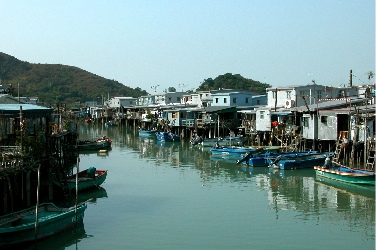
The streets were lined with market stalls. Fish were hanging out to dry on strings suspended from poles. Baskets of tiny oranges were also laid out in the sun to dry. And tanks of fresh fish, with everything from prawns, to crabs, to lobsters were for sale. The streets backed on to canals that were bordered with rickety looking houses on stilts, and egrets sunned themselves from their perches on the boats parked below. It was all quite picturesque, but very poor, just in case I make it sound too romantic. We decided to take a boat ride that took us out along the coast to see pink dolphins (which we never spotted) and then through the canals to see how people lived here. It was quite fascinating that these houses on stilts, which looked as though a strong wind would blow them all down, had TV antennas, air conditioning, container gardens, shrines, etc.
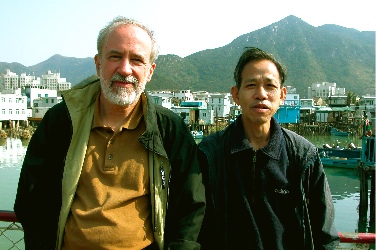
Just as we had decided it was time to leave, a man came along who spoke English and offered to give us a walking tour of the village. Ping Kee (or Pinky as we call him) was a very interesting character and I'm glad we decided to take a chance on him. He took us through the back streets of these stilt houses, into two very small but interesting temples, and along the canal banks, all the while explaining to us how people lived and what life was like in this small village. He wanted to sell us a couple of trinkets at the end of the tour so he did have a bit of an angle, but we thought it was a very small price to pay for such a good time. (I think Mike was flattered when Pinky told him that his beard made him look like a chinese philosopher.) Then it was time for another long ride on the bus to the subway that would take us under the water and back to central Hong Kong. It had been quite a tiring day, but I wouldn't have missed any of it, not even the thrills and chills bus rides.
>